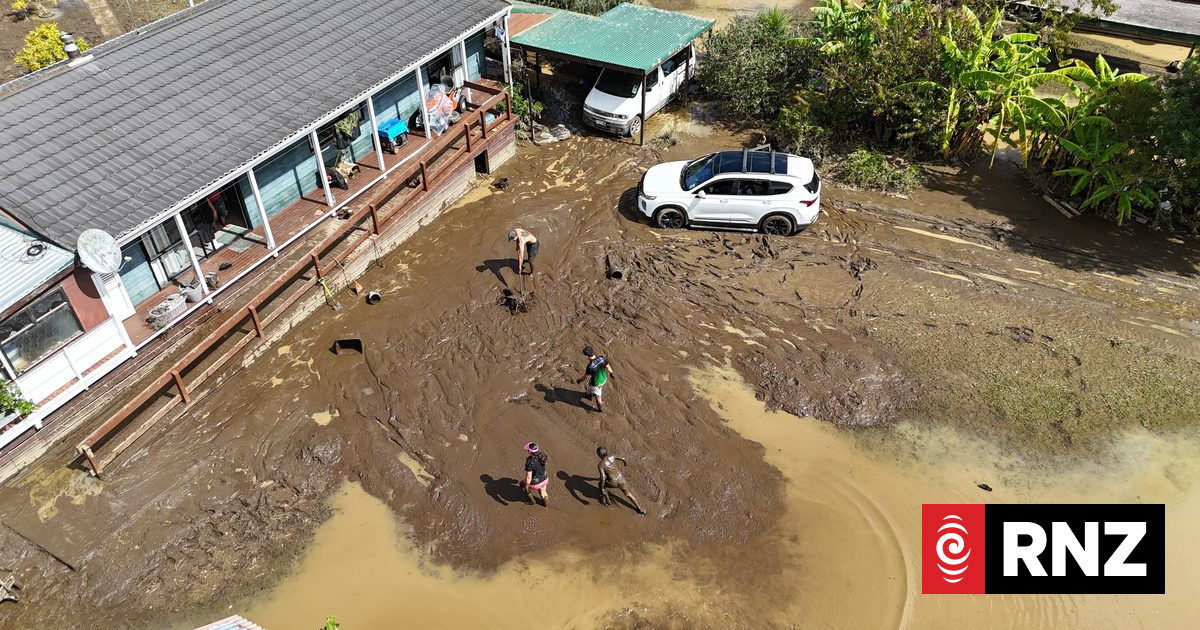
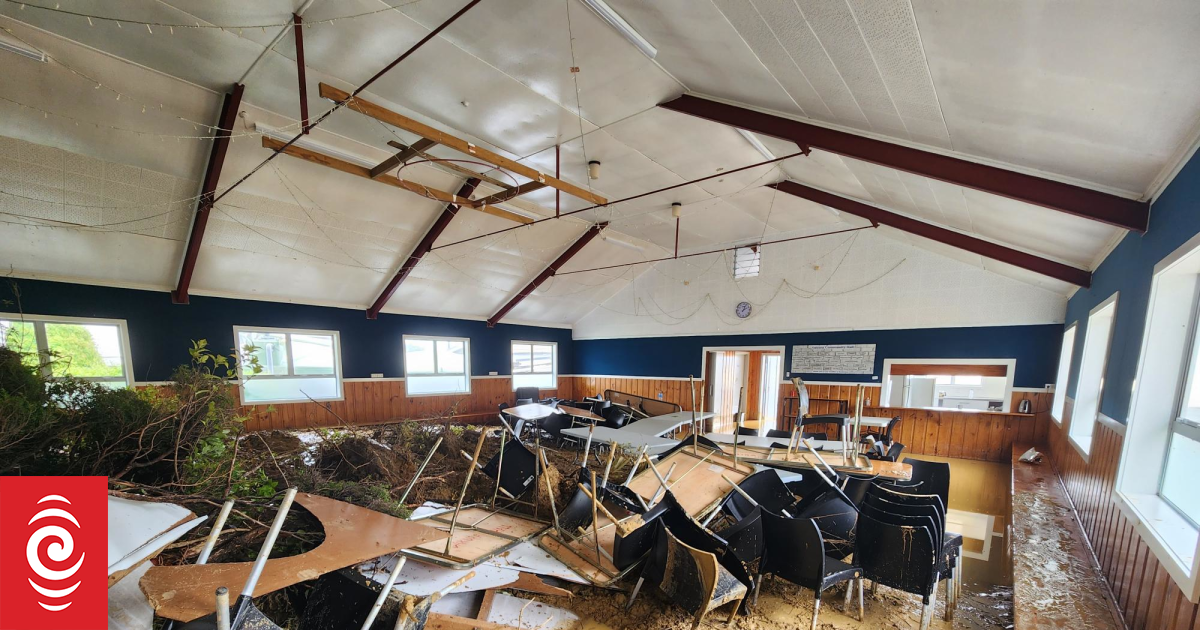

Ōakura Community Hall had been devastated by a slip that smashed through the rear wall and filled the hall with mud, trees and debris on Sunday 18 January, 2026. Muddy water was continuing to flow out the hall’s front doors hours after the slip begun. The hall was only reroofed and renovated about 18 months ago, after a massive community fundraising effort.
Photo: RNZ/ Peter de Graaf
Residents of small communities are wondering whether there are better ways to empower them to clear up after storms.
In several storm-hit areas, councils asked residents to leave slip clearing on public land and roads to emergency services or council contractors for safety and asset management reasons.
But this could mean long waits for pockets of residents with low priority slips, and communities often take action regardless.
‘Auntie Trish’, of Ōtetao Reti Marae in Northland, was stuck when the extreme weather last week closed the roads to the marae.
No one could get in or out until they coordinated with a neighbouring Mokau Marae to the south.
“All of these young lads here came and just got their shovels and started digging away,” she said.
She said they worked for two days digging it out, and that was the only reason the marae was accessible.
She was proud of their efforts and back at her marae, they did what they could to support the diggers.
“We just fed them and they all turned up,” she said.

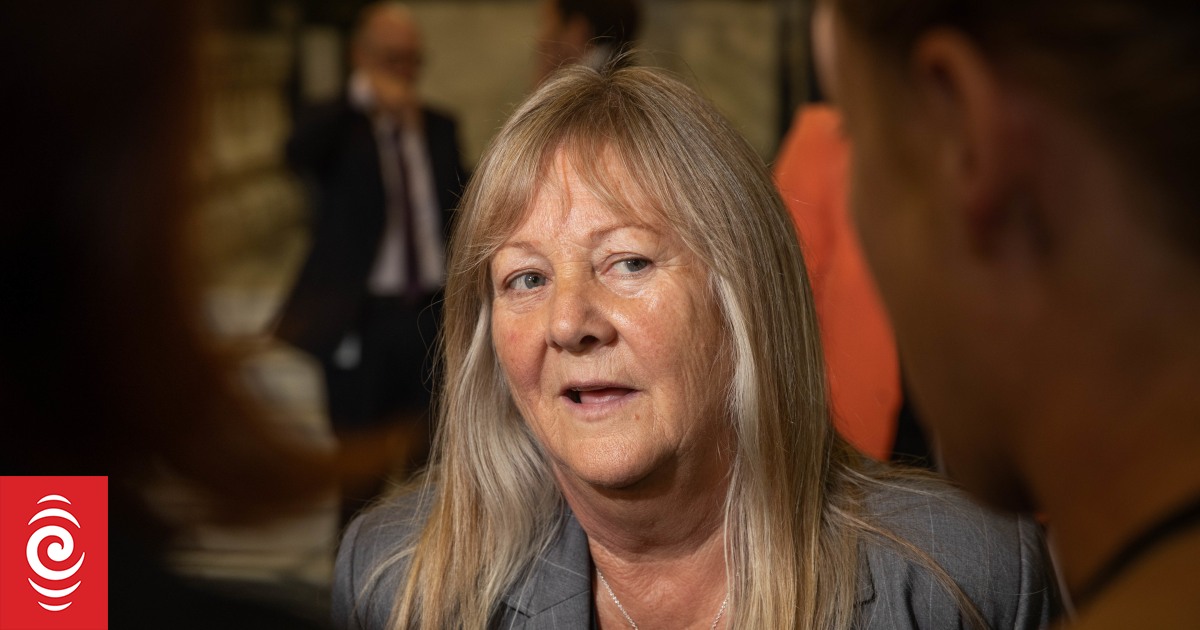
“Auntie Trish” is the chief dispenser of hugs for those in need of support at Ōtetao Reti Marae.
Photo: RNZ / Peter de Graaf
Resident Maureen Hing said without equipment on hand, her sons, nephews and others from both marae took to the physical work.
“They all started digging with their shovels and clearing it, there was quite a lot of them, about 12 of them,” she said.
They all felt that clearing the road quickly was necessary and they were able to do it quickly.
“They just did it to get people, to get supplies – petrol, diesel – that’s the only way we can do it you know, and they did it on the first day we had this, on the Sunday,” said Hing.
However, councils often strongly discourage people from clearing roads, unless absolutely necessary.
A Whangārei District Council spokesperson says slips on public land and roads should be reported to and cleared by trained contractors, primarily for safety reasons.
“While we understand people often want to help clear roads for themselves or their neighbours, clearing slips on public land without an assessment can place individuals at serious risk and may also damage council assets or interfere with emergency response, so this is strongly discouraged unless absolutely necessary,” the spokesperson said.
They said council crews were trained and equipped to assess land movement, falling debris, damaged infrastructure, and know about underground services.
The situation was the same in another storm-hit district of Thames Coromandel, and Mercury Bay South Residents and Ratepayers Association chair Paul Hopkins said he wants to see it change.
He said smaller slips, or slips that don’t completely block a road, can be treated as low-priority by the council and take time to be cleared
“It’s taken some time to actually clear some of the smaller slips on the roads, which I feel the local council should look at their procedures,” he said.
Hopkins thought locals would like to be able to clear roads and reestablish access quickly if given the authority to do so, and that it would be beneficial for everyone.
“The council’s got a lot on their plate, but I do feel as if councils need to give back some responsibility to the locals, because in days-gone-by you didn’t have a council to do it, the locals would do it, and it’s something that I definitely think they need to re-look at,” he said.
Hopkins thought small communities had the skills and people to take more care of themselves – just as the Northland marae proved.
They just needed to be more empowered to do so.
Sign up for Ngā Pitopito Kōrero, a daily newsletter curated by our editors and delivered straight to your inbox every weekday.